Refine Your Profile & Improve Your Breathing
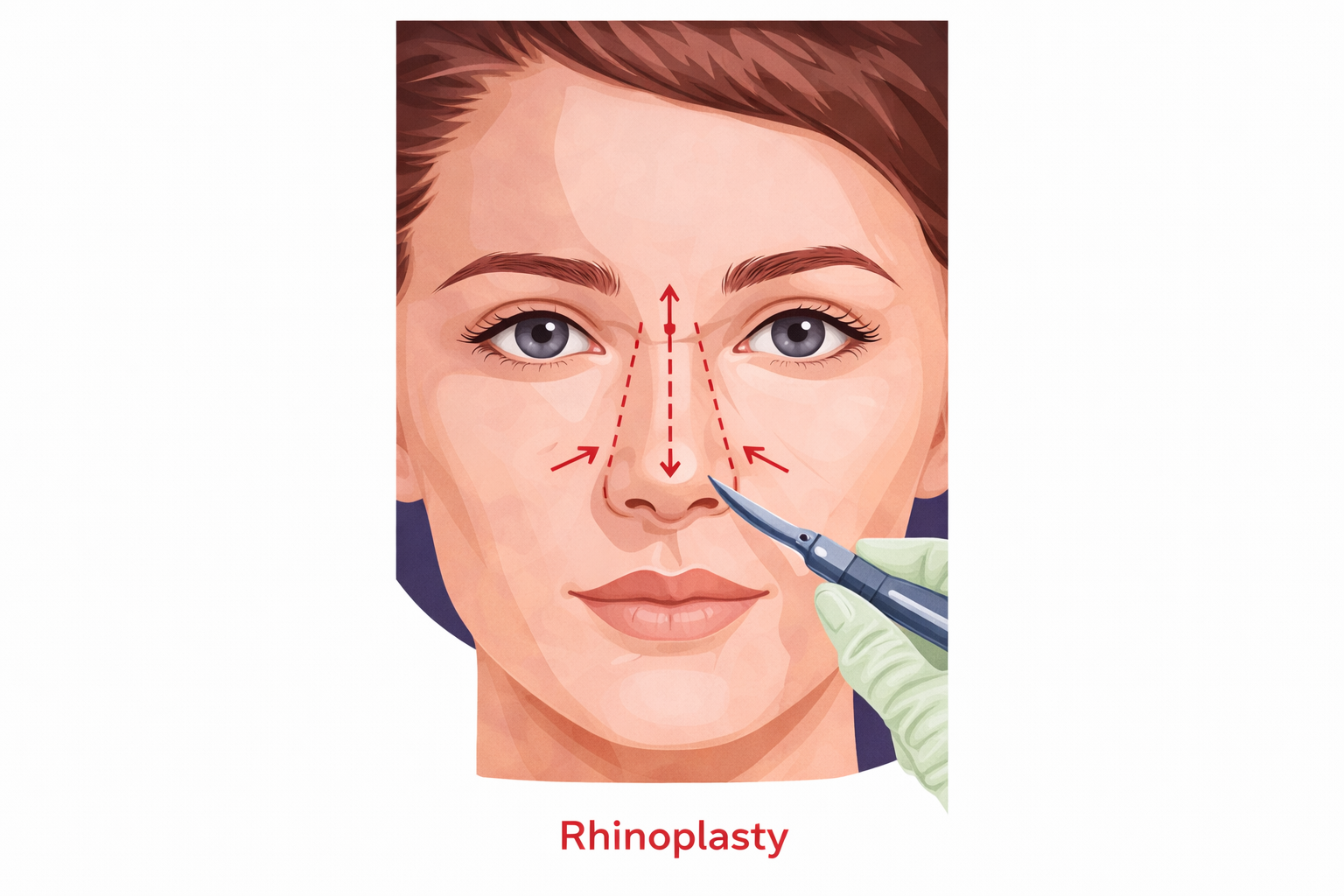
Rhinoplasty
Rhinoplasty, commonly known as a “nose job,” is a surgical procedure that reshapes or corrects the nose for cosmetic and/or functional purposes. It enhances facial harmony while improving breathing when structural issues are present.
What Is Rhinoplasty?
- Improve facial balance
- Refine nasal bridge or tip
- Correct asymmetry
- Repair deformities from injury
- Improve breathing due to septal deviation
The procedure can be purely aesthetic, functional, or a combination of both.
Who is a Good Candidate?
You may be a suitable candidate if you:
- Are dissatisfied with the size or shape of your nose
- Have breathing difficulties
- Have nasal deformities (congenital or post-traumatic)
- Are in good physical and psychological health
- Have realistic expectations
A detailed consultation is necessary to determine the best approach.
Step-by-Step Procedure
Discussion of aesthetic & functional goals
Nasal structure evaluation
Skin thickness assessment
Facial proportion analysis
Medical review & photography
3D simulation (if available)
Blood tests & medical evaluation
Stop smoking (2 weeks prior)
Avoid blood-thinning medications
Follow fasting instructions
General anesthesia (most common)
Continuous monitorin
Two main techniques:
Closed Rhinoplasty
Incisions inside nostrils
No visible scars
Open Rhinoplasty
Small incision across columella
Better surgical visibility
During surgery, the surgeon may:
Reduce or augment the nasal bridge
Refine nasal tip
Straighten deviated septum
Narrow nostrils
Duration: 1.5–3 hours.
Nasal splint applied
Mild swelling & bruising expected
Temporary nasal congestion
Same-day discharge or 1-night stay
Pain managed with medication
Splint removal after 7–10 days
Return to daily activities in 2–4 weeks
Gradual breathing improvement
Final results visible after 6–12 months
Benefits of Rhinoplasty
Improved facial harmony
Refined nasal shape
Corrected deformities
Enhanced self-confidence
Better breathing (when combined with septoplasty)